
NeuroQ Review: Does NeuroQ Really Work? Ingredients, Studies And Side Effects
Our Verdict At A Glance
NeuroQ is a legitimate product with a sensible, fully disclosed formula, but its marketing claims run ahead of the evidence. Every dose is on the label, a well-known neurologist designed it, and it has been tested in a placebo-controlled trial. However, that trial was funded by the company, its full results have not been published in a peer-reviewed journal, and the headline “97%” claim comes from a different study with no placebo group.
- Good fit if: you are over 40, notice everyday memory slips, take no blood thinners and want a transparent, caffeine-free formula with a 60-day money-back guarantee.
- Choose something else if: you take anticoagulants or other prescription medications, you want independent published evidence before you buy, or you are a younger adult looking for focus and productivity. For most readers, we recommend Mind Lab Pro.
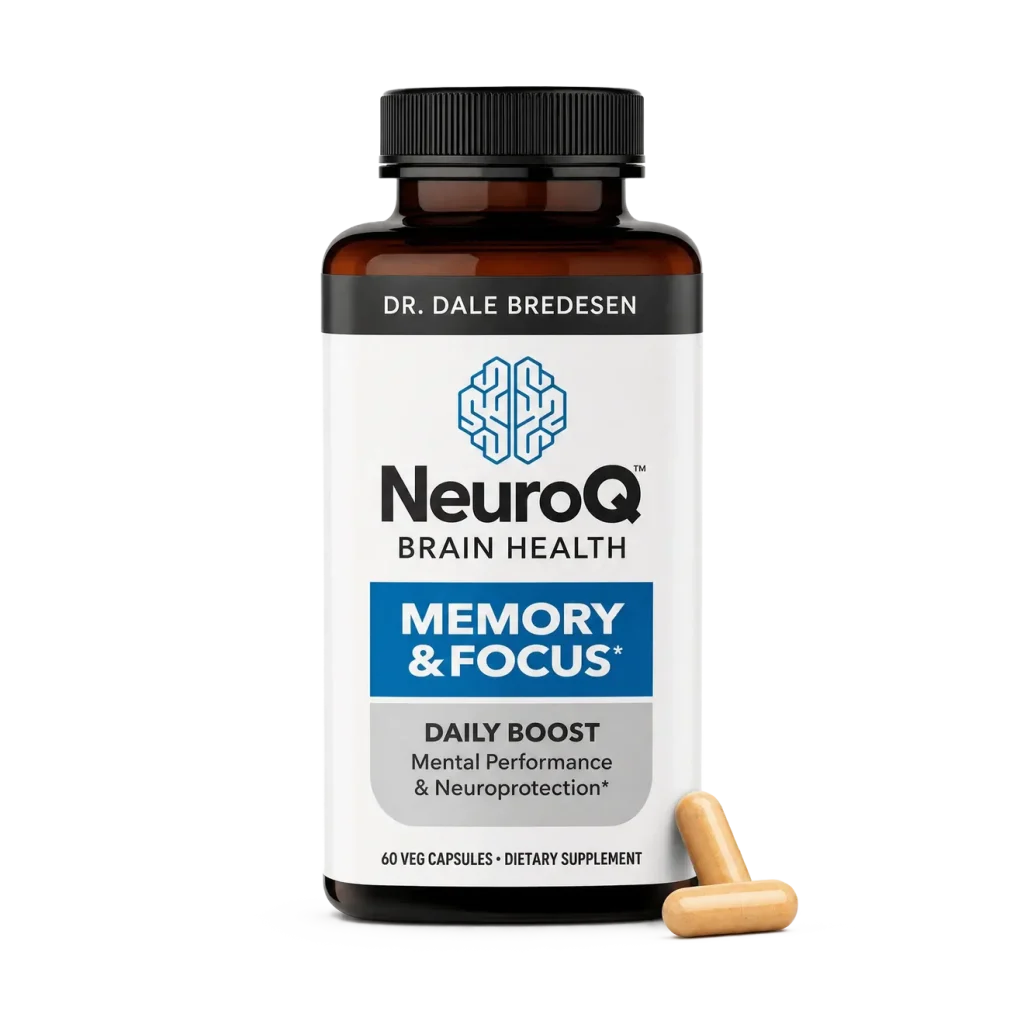
What Is NeuroQ?
NeuroQ is a line of brain health supplements made by LifeSeasons, Inc., a supplement company based in Kaysville, Utah. The flagship product, NeuroQ Memory & Focus, is a two-capsule daily formula marketed to support memory, focus and mental clarity by addressing what the company calls “the four primary causes of age-associated mental decline.” It is heavily advertised on TV and online, which is why so many people search for NeuroQ reviews before buying.
The NeuroQ website also sells an Extra Strength version, a Memory DHA-400 omega-3, a multivitamin, a Calm Focus capsule and a Sleep Now mint strip. This review focuses on Memory & Focus and Memory & Focus Extra Strength, the two products most people mean when they search for NeuroQ.
Who Is Dr. Dale Bredesen, And What Is His Role In NeuroQ?
NeuroQ’s site presents neurologist Dale Bredesen, M.D., as the developer and formulator of NeuroQ. Dr. Bredesen spent decades researching neurodegeneration at UCLA and the Buck Institute and is the author of the bestselling book The End of Alzheimer’s. He is best known for the ReCODE protocol, a personalized lifestyle program aimed at cognitive decline.
His credentials are real, but his work is also debated. A 2020 KFF Health News investigation reported that other Alzheimer’s researchers criticize the ReCODE protocol for relying on patient anecdotes and small, uncontrolled reports rather than placebo-controlled trials. NeuroQ’s site does not say whether Dr. Bredesen is paid for his role, so treat his involvement as the formulator’s credentials, not an independent endorsement.
NeuroQ Ingredients: The Full Label
Unlike many brain supplements, NeuroQ lists every dose. There are two versions, and they differ in one ingredient: the standard formula on NeuroQ’s site includes bee propolis, while Extra Strength replaces it with huperzine A.
| Ingredient (Per 2 Capsules) | Memory & Focus | Extra Strength |
|---|---|---|
| Gotu kola extract (4:1) | 250 mg | 250 mg |
| Turmeric extract (95% curcuminoids) | 250 mg | 250 mg |
| Ginkgo biloba leaf extract (24% flavone glycosides, 6% terpene lactones) | 120 mg | 120 mg |
| Phosphatidylserine | 100 mg | 100 mg |
| Coffee fruit extract (NeuroFactor, under 1 mg caffeine) | 100 mg | 100 mg |
| Bee propolis | 75 mg | None |
| Huperzine A | None | 200 mcg |
Sources: the Memory & Focus ingredients are from the NeuroQ product page; the Extra Strength label is from Professional Supplement Center. Some retailers list the huperzine A formula under the standard Memory & Focus name, so check the label on the bottle you are buying, especially if you take medications.
What The Research Says About Each NeuroQ Ingredient
Phosphatidylserine (100 mg)
Phosphatidylserine is a compound found in brain cell membranes. In a 2010 placebo-controlled trial in 78 Japanese adults aged 50 to 69 with memory complaints, 100 mg or 300 mg per day for six months improved memory in participants who started with relatively low scores, mostly in delayed verbal recall. NeuroQ’s 100 mg matches the lower dose in that study, and its target audience matches the study population well. This is one of NeuroQ’s strongest ingredients.
Coffee Fruit Extract (100 mg)
NeuroFactor is a whole coffee fruit extract with almost no caffeine. In a small 2013 pilot study funded by its manufacturer, a single 100 mg dose raised blood levels of brain-derived neurotrophic factor (BDNF), a protein involved in brain cell growth, compared with baseline. That study measured BDNF only, not memory or thinking, and included just 25 people across five groups. It is an interesting lead, not proof of a cognitive benefit.
Ginkgo Biloba (120 mg)
Ginkgo is one of the most studied herbs for memory, and the results have mostly been disappointing. The large Ginkgo Evaluation of Memory study published in JAMA in 2008 followed more than 3,000 older adults for about six years and found that 240 mg of ginkgo per day did not reduce the risk of dementia. The National Center for Complementary and Integrative Health says evidence that ginkgo improves thinking in healthy people is weak. NeuroQ uses half the GEM study dose.
Turmeric (250 mg)
Curcumin, the main active compound in turmeric, has drawn interest for brain health because of its anti-inflammatory effects. The best memory evidence comes from an 18-month placebo-controlled trial published in 2018, in which 180 mg per day of a highly absorbable curcumin (Theracurmin) improved some memory measures in adults aged 51 to 84. The catch is absorption: the researchers note that ordinary curcumin is poorly absorbed, and NeuroQ uses a standard turmeric extract rather than an enhanced-absorption form. The dose is generous, but how much reaches the brain is uncertain.
Gotu Kola (250 mg)
Gotu kola is a traditional Ayurvedic and Chinese herb. Its cognitive research consists mostly of animal studies and a handful of small human trials with mixed results. It is a reasonable inclusion but not one that carries much of the formula’s weight.
Bee Propolis (75 mg, Standard Formula Only)
Propolis is a resin bees make from plant material. NeuroQ’s own research page cites a 2020 Japanese placebo-controlled study of a propolis-based supplement that also contained ginkgo, phosphatidylserine and curcumin. That formula did not include gotu kola or coffee fruit extract, so its results do not transfer directly to NeuroQ. People who are allergic to bee products should avoid the standard formula.
Huperzine A (200 mcg, Extra Strength Only)
Huperzine A slows the breakdown of acetylcholine, a neurotransmitter involved in memory. A 2013 meta-analysis found it improved cognitive scores in people with Alzheimer’s disease, though the trials were small and of limited quality. It works on the same pathway as prescription Alzheimer’s drugs such as donepezil, so do not combine Extra Strength with those medications without your doctor’s approval.
Does NeuroQ Really Work? What The Clinical Studies Show
NeuroQ has more product-specific research than most supplements sold on TV. But every study was sponsored by LifeSeasons or an ingredient supplier, and none of the trials on the current formula has been published in a peer-reviewed journal.
The 2024 Placebo-Controlled Trial
This is NeuroQ’s most important study. According to its ClinicalTrials.gov registration (NCT06672094), LifeSeasons sponsored a randomized, triple-blind, placebo-controlled trial at KGK Science in Ontario, Canada. Adults aged 40 to 79 with self-reported memory problems took two capsules of NeuroQ or a placebo daily for 60 days. The main outcome was a computerized cognitive test score called the Neurocognitive Index.
On its clinical research page, NeuroQ reports that its group improved significantly on the Neurocognitive Index within seven days and held that improvement through 60 days, with gains over placebo in verbal memory, complex attention and psychomotor speed. Keep three things in mind:
- The results come from a company-held study report, not a peer-reviewed publication, and NeuroQ’s page gives no effect sizes or raw numbers.
- The trial registry lists 40 participants enrolled, while NeuroQ’s site describes 80. We could not reconcile the difference.
- Illuminate Labs reported that NeuroQ removed an efficacy chart after criticism and replaced it with one labeled a “simulated representation.”
Where The “97%” Claim Comes From
NeuroQ’s marketing says 97% of people saw improvement in memory, focus or concentration. The footnote ties that figure to “average increase in percentile domain scores in a company-sponsored 90-day clinical study.” The 2024 placebo trial lasted 60 days, not 90. The company’s registered 90-day study (NCT04149639) was an open-label study of 40 adults with no placebo group, in which participants also made lifestyle changes based on Dr. Bredesen’s protocol. If the 97% figure comes from that study, it cannot separate the effect of NeuroQ from the lifestyle changes, the placebo effect or simple practice on the tests. NeuroQ’s own research page acknowledges that study needs placebo-controlled follow-up.
Our Take On The Evidence
NeuroQ deserves credit for running a registered, placebo-controlled trial of its actual formula. Until the full results are published and peer-reviewed, though, the honest answer to “does NeuroQ really work?” is: possibly, modestly, for adults over 40 with mild memory complaints, and the strongest claims in its advertising are not yet supported by independent evidence.
NeuroQ Side Effects And Who Should Avoid It
NeuroQ reports that its 2024 trial found the product safe and well tolerated. Its ingredients are generally well tolerated at these doses, but several have known interactions:
- Blood thinners: ginkgo may increase bleeding risk in people taking anticoagulants such as warfarin, according to NCCIH. Talk to your doctor before taking NeuroQ if you take any blood-thinning medication or have surgery scheduled.
- Stomach upset: turmeric can cause nausea, acid reflux or diarrhea in some people, per NCCIH. Taking NeuroQ with food, as directed, may help.
- Bee allergies: avoid the standard formula, which contains propolis.
- Alzheimer’s medications: avoid Extra Strength, which contains huperzine A, unless your doctor approves.
- Pregnancy, breastfeeding and children: the label says to consult a healthcare professional if pregnant or nursing, and NeuroQ is not intended for children. NCCIH notes ginkgo and turmeric supplements may be unsafe during pregnancy.
NeuroQ Price, Subscription And Money-Back Guarantee
At the time of writing, the NeuroQ product page showed these subscription prices for Memory & Focus:
| Plan | Price | Per Bottle |
|---|---|---|
| 1 month, billed every 30 days | $69.95 | $69.95 |
| 3 months, billed every 90 days | $139.90 | $46.63 |
| 6 months, billed every 180 days | $209.85 | $34.97 |
Single bottles at retailers have run about $80. Each bottle holds 60 capsules, a 30-day supply.
Watch the subscription. The prices above are recurring. NeuroQ’s checkout says you authorize charges at the listed price and frequency until you cancel. The site says you can cancel by calling 1-800-513-2151 or emailing support@neuroq.com. If you only want to try one bottle, make sure you understand what you are signing up for, and keep a record of any cancellation.
The guarantee. NeuroQ advertises a 60-day money-back guarantee that applies even if the bottle is empty. That is longer than most competitors offer and makes NeuroQ relatively low-risk to try if you buy direct. Purchases from Amazon and other retailers follow that retailer’s return policy instead.
Is NeuroQ A Scam?
No. NeuroQ is a real product from an established company. It is sold through major retailers, it lists every ingredient dose, it has a registered clinical trial and it offers a 60-day guarantee. Those are not the hallmarks of a scam.
What earns NeuroQ skepticism is its marketing. TV-style advertising, a 97% claim tied to an uncontrolled study, an efficacy chart that Illuminate Labs says was swapped for a “simulated representation” and subscription-first pricing all make the product look more proven than it is. The product is legitimate; the advertising is aggressive. Buy it for what the evidence supports, not for what the ads promise.
NeuroQ Vs Mind Lab Pro
Both formulas disclose every dose, and both include phosphatidylserine. NeuroQ is built for adults over 40 worried about age-related memory changes, includes ginkgo and turmeric and has a 60-day guarantee. Mind Lab Pro is a broader daily nootropic with no ginkgo, which matters if you take blood thinners, and it is our top pick for most readers. If you want to compare other well-known formulas, see our Alpha Brain review and our Mind Lab Pro vs Alpha Brain comparison.
Final Verdict: Is NeuroQ Worth It?
NeuroQ is better than most brain supplements advertised on TV. The label is transparent, phosphatidylserine is dosed at a level that has worked in older adults with memory complaints, and the company has run a placebo-controlled trial of its actual formula. Its weaknesses are the evidence behind its biggest claims, a ginkgo dose that research has not shown to help, a standard curcumin with uncertain absorption and a subscription-first checkout.
If you are over 40, notice everyday memory slips and do not take blood thinners, NeuroQ is a reasonable product to try under its 60-day guarantee. If you take prescription medications or want a formula backed by independent research, talk to your doctor first and consider Mind Lab Pro.
NeuroQ FAQs
How Long Does It Take For NeuroQ To Work?
NeuroQ says its trial participants showed improvement within seven days, measured on a computerized test. Most of the ingredient research, including the phosphatidylserine and curcumin studies, ran for months. Give it at least 30 to 60 days, which still fits within the 60-day guarantee if you buy direct.
Does NeuroQ Have Caffeine?
Only a trace. The coffee fruit extract contributes less than 1 mg of caffeine per serving, far less than a cup of decaf.
What Is The Difference Between NeuroQ And NeuroQ Extra Strength?
Both share the same five core ingredients at the same doses. The standard formula adds 75 mg of bee propolis, while Extra Strength adds 200 mcg of huperzine A instead. Extra Strength is not a higher dose of the same formula.
Can I Buy NeuroQ On Amazon?
Yes. NeuroQ is sold on Amazon and at other retailers. Buying direct gets you the 60-day money-back guarantee; Amazon purchases follow Amazon’s return policy.
Who Makes NeuroQ?
NeuroQ is made by LifeSeasons, Inc. of Kaysville, Utah, and was formulated by neurologist Dr. Dale Bredesen.
Sources
- LifeSeasons, Inc. A Study to Investigate the Safety and Efficacy of NeuroQ on Cognitive Function in Healthy Adults with Self-Reported Memory Problems. ClinicalTrials.gov NCT06672094. Registry record
- LifeSeasons, Inc. A Study Investigating the Effectiveness of a LifeSeasons NeuroQ Supplement With Lifestyle Changes to Improve Cognitive Function in Healthy Adults Who Have One or More Risk Factors for Cognitive Decline. ClinicalTrials.gov NCT04149639. Registry record
- NeuroQ. Clinical research. NeuroQ.com
- Kato-Kataoka A, Sakai M, Ebina R, et al. Soybean-derived phosphatidylserine improves memory function of the elderly Japanese subjects with memory complaints. Journal of Clinical Biochemistry and Nutrition. 2010;47(3):246-255. Full text
- Reyes-Izquierdo T, Nemzer B, Shu C, et al. Modulatory effect of coffee fruit extract on plasma levels of brain-derived neurotrophic factor in healthy subjects. British Journal of Nutrition. 2013;110(3):420-425. Study summary
- DeKosky ST, Williamson JD, Fitzpatrick AL, et al. Ginkgo biloba for prevention of dementia: a randomized controlled trial. JAMA. 2008;300(19):2253-2262. Study summary
- Small GW, Siddarth P, Li Z, et al. Memory and brain amyloid and tau effects of a bioavailable form of curcumin in non-demented adults: a double-blind, placebo-controlled 18-month trial. American Journal of Geriatric Psychiatry. 2018;26(3):266-277. Full text
- Yang G, Wang Y, Tian J, Liu JP. Huperzine A for Alzheimer’s disease: a systematic review and meta-analysis of randomized clinical trials. PLoS One. 2013;8(9):e74916. Full text
- National Center for Complementary and Integrative Health. Ginkgo. NCCIH
- National Center for Complementary and Integrative Health. Turmeric. NCCIH
- Marsa L. Alzheimer’s Inc.: Colleagues question scientist’s pricey recipe against memory loss. KFF Health News. December 17, 2020. Article
- Illuminate Labs. NeuroQ review. Article
- NeuroQ Memory & Focus product page, NeuroQ.com; NeuroQ Extra Strength supplement facts, Professional Supplement Center.