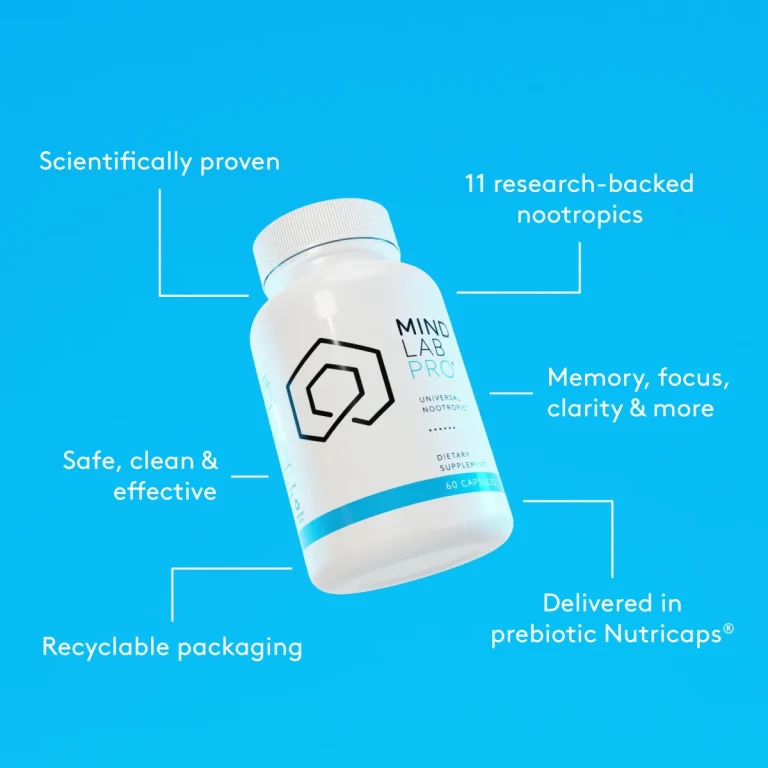
Mind Lab Pro Vs Alpha Brain: Formulas, Evidence, Price And Side Effects
Mind Lab Pro and Alpha Brain are both caffeine-free, multi-ingredient nootropics, but they differ in one important way: Mind Lab Pro discloses the dose of every ingredient, while Alpha Brain lists most of its ingredients inside proprietary blends. Alpha Brain has one published randomized controlled trial of its own formula; Mind Lab Pro relies on research into its individual ingredients. Alpha Brain is slightly cheaper per serving, and Mind Lab Pro is the more transparent choice.
Disclosure: nootropic.org/ may earn a commission from qualifying purchases made through links on this page, including as an Amazon Associate. This never affects which products we recommend. Learn more.
Key Takeaways
- Mind Lab Pro lists exact doses for all 11 ingredients; Alpha Brain uses three proprietary blends, so most individual doses are not disclosed.
- Alpha Brain’s 2016 trial in 63 young adults found improvements in delayed verbal recall and executive function, with an Onnit employee among the authors.[1]
- Several Mind Lab Pro ingredients, including bacopa, phosphatidylserine and rhodiola, are below the doses used in clinical studies.[2][9]
- Alpha Brain contains huperzine A, a potent acetylcholinesterase inhibitor, which deserves more caution than anything in Mind Lab Pro.[6]
- Price per serving at list price: about $1.93 for Alpha Brain and $2.30 for Mind Lab Pro.
Mind Lab Pro Vs Alpha Brain At A Glance
| Feature | Mind Lab Pro | Alpha Brain |
|---|---|---|
| Maker | Opti-Nutra (Performance Lab family) | Onnit |
| Label | Fully disclosed doses | Proprietary blends (Flow, Focus, Fuel) |
| Caffeine | None | None |
| Serving | 2 capsules | 2 capsules (Onnit suggests starting with 1) |
| Price (one-time) | $69 for 30 servings | $57.95 for 60 capsules (30 full servings) |
| Cost per serving | About $2.30 | About $1.93 ($1.64 on subscription) |
| Formula-specific RCT | None published | One (2016, n=63) |
| Guarantee | 30-day money-back | 30-day money-back |
Ingredients Side By Side
Mind Lab Pro Formula
Mind Lab Pro (current version 4) lists, per two-capsule serving: citicoline (Cognizin) 250 mg; Bacopa monnieri (24% bacosides) 150 mg; organic lion’s mane (fruit and mycelium) 500 mg; phosphatidylserine (sunflower) 100 mg; N-acetyl L-tyrosine 175 mg; L-theanine 100 mg; Rhodiola rosea (3% rosavins, 1% salidroside) 50 mg; maritime pine bark extract (95% proanthocyanidins) 75 mg; vitamin B6 2.5 mg; folate 100 mcg; and vitamin B12 7.5 mcg.
Alpha Brain Formula
Onnit’s product page lists vitamin B6, L-tyrosine, L-theanine, alpha-GPC, bacopa, huperzine A (from toothed clubmoss), L-leucine and pterostilbene, and describes the product as caffeine-free. The ingredient statement on Onnit’s Amazon listing groups them into three proprietary blends:
- Onnit Flow Blend: L-tyrosine, L-theanine, oat straw extract, phosphatidylserine
- Onnit Focus Blend: alpha-GPC, bacopa leaf extract, toothed clubmoss extract (standardized to 1% huperzine A)
- Onnit Fuel Blend: L-leucine, pterostilbene
Because each blend shows only a combined weight, you cannot tell how much of most ingredients you are getting. Labels can change, so check the Supplement Facts panel on the bottle you buy. Our full Alpha Brain review goes deeper on the formula.
Dose Comparison With Clinical Research
| Ingredient | Mind Lab Pro | Alpha Brain | Dose In Key Studies |
|---|---|---|---|
| Bacopa | 150 mg | Undisclosed (in blend) | 300 mg/day for 12 weeks[2] |
| Citicoline | 250 mg | Not included | 250–500 mg/day[3][4] |
| Phosphatidylserine | 100 mg | Undisclosed (in blend) | 100–300 mg/day[9] |
| L-tyrosine / NALT | 175 mg NALT | Undisclosed (in blend) | Gram-level doses under stress[11] |
| Rhodiola | 50 mg | Not included | 576 mg/day in a fatigue trial[10] |
| Huperzine A | Not included | Included (amount in blend) | Studied mainly in dementia trials[7] |
| Alpha-GPC | Not included | Undisclosed (in blend) | See Alpha-GPC vs citicoline |
The honest read: Mind Lab Pro’s citicoline dose matches the lower arm of a published attention trial,[4] but its bacopa is half the usual study dose, its PS is one-third of the classic 300 mg dose and its rhodiola is far below the amount used in fatigue research. With Alpha Brain, the blends make that comparison impossible for most ingredients.
What The Research Says
Alpha Brain’s Clinical Trial
In a randomized, double-blind, placebo-controlled trial published in 2016, 63 healthy adults aged 18 to 35 took Alpha Brain or placebo for six weeks after a two-week placebo run-in. Compared with placebo, the Alpha Brain group improved on delayed verbal recall and executive function tasks.[1]
Credit where due: few branded nootropics have tested their actual formula. But the trial was small and short, one author was affiliated with Onnit Labs, the authors themselves called it the first such trial and said the results merit further study, and the formula tested in 2016 may not be identical to what is sold today.
Mind Lab Pro’s Evidence
Mind Lab Pro has no published placebo-controlled trial of the finished formula that we could verify, so its case rests on its ingredients. The strongest of those are citicoline, with randomized trials showing improved attention in adolescents (250–500 mg) and improved episodic memory in older adults (500 mg),[3][4] and bacopa, though at a lower dose than studied.[2] Ingredient-level evidence does not prove that a combination works at the doses used.
Alpha Brain Side Effects Vs Mind Lab Pro Side Effects
Alpha Brain Side Effects
- Huperzine A: described in the research literature as a powerful acetylcholinesterase inhibitor.[6] Reviews of clinical trials in dementia have not reported serious side effects, but most of those trials were low quality.[7] If you take prescription medication or have a chronic health condition, ask a doctor before using a product that contains it. See our huperzine A page.
- Alpha-GPC: a large Korean cohort study found people prescribed alpha-GPC had a higher 10-year stroke risk, rising with longer use. It was observational, so it cannot prove cause, but it is worth knowing about.[8]
- Bacopa: stomach upset was the most common side effect in an older-adult trial.[2]
- Label guidance: Onnit advises starting with one capsule, taking no more than two capsules in 24 hours, and not using it if pregnant, nursing or under 18.
Mind Lab Pro Side Effects
- Bacopa: the same mild digestive upset is possible, though MLP’s dose is lower.[2]
- L-theanine: in one trial, 250 mg of L-theanine alone increased headache ratings slightly compared with placebo.[5]
- MLP contains no huperzine A, alpha-GPC or stimulants, which makes it the gentler option for most people.
For a broader overview, read our nootropic side effects guide.
Price And Value
At list price, Alpha Brain costs $57.95 for 60 capsules, which is 30 full servings at Onnit’s recommended two capsules, or about $1.93 per serving ($49.26 per bottle on Onnit’s 15% subscription). Mind Lab Pro costs $69 for 30 servings, about $2.30 per serving. Alpha Brain is cheaper, but with proprietary blends you are paying for a formula you cannot fully evaluate. Both offer a 30-day money-back guarantee.
Which Should You Choose?
Choose Mind Lab Pro if you want to know exactly what you are taking, prefer to avoid huperzine A and alpha-GPC, and want a broad, stimulant-free daily stack. Accept that several doses are below study levels; if you want a study-matched dose of a single ingredient, a standalone product is better.
Choose Alpha Brain if you value that the finished formula has been tested in a randomized trial, you are a healthy younger adult similar to the trial participants, and you are comfortable with undisclosed blend doses and huperzine A.
Our pick for most readers is Mind Lab Pro, mainly for label transparency and a gentler ingredient profile. See how both fit into our best nootropics rankings, or browse all product reviews.
Our Pick: Mind Lab Pro
Fully disclosed, caffeine-free formula with citicoline, bacopa, lion’s mane, phosphatidylserine, L-theanine, NALT, rhodiola, maritime pine bark and B vitamins. $69 for 30 servings, 30-day money-back guarantee.
Frequently Asked Questions
Is Mind Lab Pro Better Than Alpha Brain?
For most people, we think so, because every dose is disclosed and it avoids huperzine A. Alpha Brain’s advantage is a published trial of its own formula.[1]
What Are The Side Effects Of Alpha Brain?
Possible issues come from its ingredients: huperzine A is a potent acetylcholinesterase inhibitor, bacopa can upset the stomach and alpha-GPC has been linked to higher stroke risk in an observational study.[2][6][8] Start with one capsule, as Onnit advises.
Does Alpha Brain Have Caffeine?
No. Onnit describes Alpha Brain as formulated without caffeine. Mind Lab Pro is also caffeine-free.
Can I Take Mind Lab Pro And Alpha Brain Together?
We do not recommend it. They overlap on several ingredients, and with Alpha Brain’s blends you cannot calculate your total intake.
Is Alpha Brain Good For ADHD?
It has not been studied in ADHD. Talk to a clinician, and see our nootropics for ADHD guide.
Medical disclaimer: This article is for educational purposes only and is not medical advice. Dietary supplements are not evaluated by the FDA to diagnose, treat, cure or prevent any disease. Talk with your doctor or pharmacist before starting a supplement, especially if you are pregnant, nursing, take prescription medication or have a medical condition. Read our full medical disclaimer.
References
- Solomon TM, et al. A randomized, double-blind, placebo controlled, parallel group, efficacy study of alpha BRAIN administered orally. Hum Psychopharmacol. 2016;31(2):135-143. PubMed
- Calabrese C, et al. Effects of a standardized Bacopa monnieri extract on cognitive performance, anxiety, and depression in the elderly: a randomized, double-blind, placebo-controlled trial. J Altern Complement Med. 2008;14(6):707-713. PubMed
- Nakazaki E, et al. Citicoline and Memory Function in Healthy Older Adults: A Randomized, Double-Blind, Placebo-Controlled Clinical Trial. J Nutr. 2021;151(8):2153-2160. PubMed
- McGlade E, et al. The Effect of Citicoline Supplementation on Motor Speed and Attention in Adolescent Males. J Atten Disord. 2019;23(2):121-134. PubMed
- Haskell CF, et al. The effects of L-theanine, caffeine and their combination on cognition and mood. Biol Psychol. 2008;77(2):113-122. PubMed
- Zheng W, et al. Huperzine A for treatment of cognitive impairment in major depressive disorder: a systematic review of randomized controlled trials. Shanghai Arch Psychiatry. 2016;28(2):64-71. PubMed
- Ghassab-Abdollahi N, et al. The effects of Huperzine A on dementia and mild cognitive impairment: an overview of systematic reviews. Phytother Res. 2021;35(9):4971-4987. PubMed
- Lee G, et al. Association of L-α Glycerylphosphorylcholine With Subsequent Stroke Risk After 10 Years. JAMA Netw Open. 2021;4(11):e2136008. PubMed
- Kato-Kataoka A, et al. Soybean-derived phosphatidylserine improves memory function of the elderly Japanese subjects with memory complaints. J Clin Biochem Nutr. 2010;47(3):246-255. PubMed
- Olsson EM, et al. A randomised, double-blind, placebo-controlled, parallel-group study of the standardised extract SHR-5 of the roots of Rhodiola rosea in the treatment of subjects with stress-related fatigue. Planta Med. 2009;75(2):105-112. PubMed
- Jongkees BJ, et al. Effect of tyrosine supplementation on clinical and healthy populations under stress or cognitive demands: a review. J Psychiatr Res. 2015;70:50-57. PubMed